Launching Peer Support for Ukraine’s Veteran Community
Moe Kolo launches in person & online peer-to-peer veteran support groups in Lviv.
We’re excited to announce a new pilot project addressing one of Ukraine’s most pressing needs: mental health support for veterans and their families.
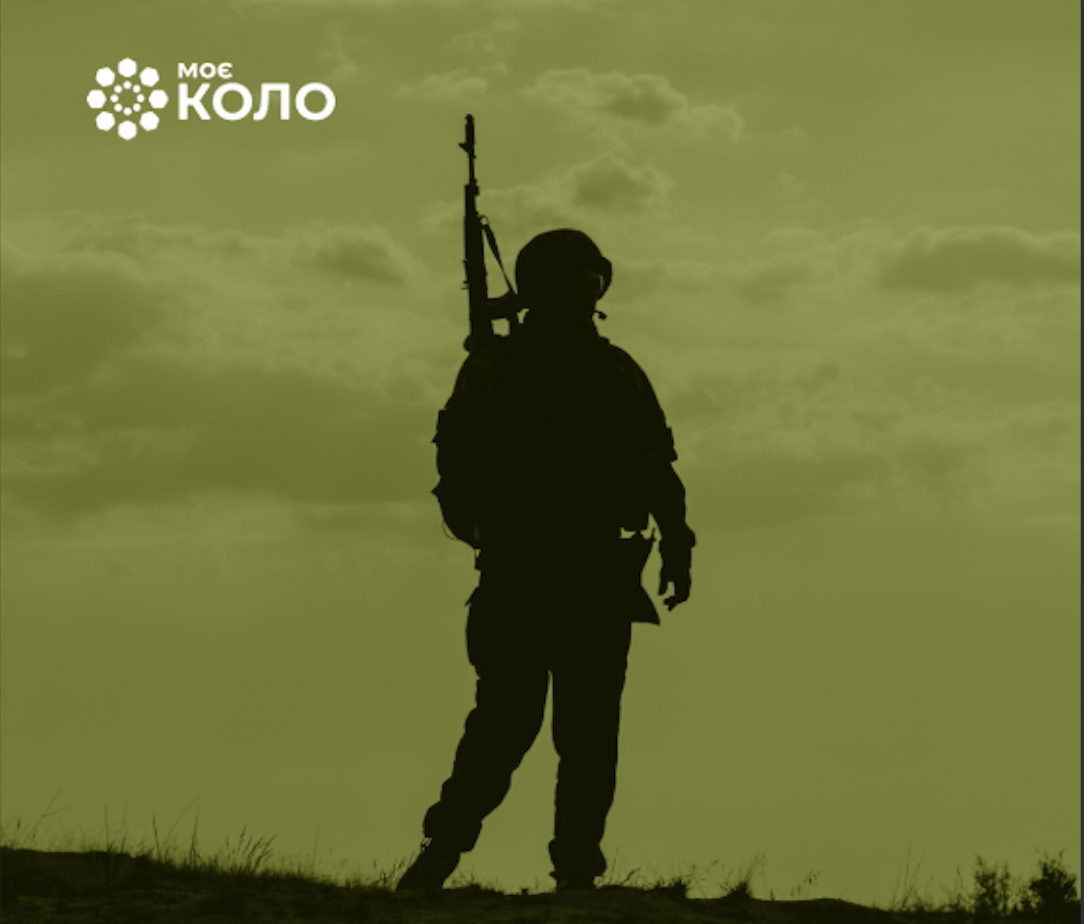
Today, the veteran community—together with their families—represents 5 to 8 million people in Ukraine. Research shows that 57% of veterans need qualified psychological support, with many facing PTSD, chronic stress, adaptation difficulties, and family conflicts.
Building on Proven Experience
Taking place March-July 2026, this pilot builds directly on Moe Kolo’s extensive track record delivering mental health and psychosocial support across Ukraine. Since the full-scale invasion, we’ve implemented 121 support groups (842 sessions) reaching over 10,700 Ukrainians from diverse vulnerable populations—internally displaced persons, families of fallen soldiers, families of prisoners of war, and those navigating the profound stresses of war. Our proven online platform has enabled us to reach participants nationwide, overcoming infrastructure challenges and geographic barriers.
What sets this pilot apart is that, in a first for Moe Kolo, we are providing support in a hybrid model. This offering recognises the specific needs of the veteran community. While maintaining our successful online approach, we’re introducing in-person sessions initially in Lviv. This hybrid format allows us to combine the national reach and accessibility of our digital platform with the deeper connection and trust-building that face-to-face interaction can provide for veterans and their families. This evolution reflects our commitment to adapting our methods to meet the unique needs of each population we serve, building on what works while innovating where communities need us most.
The peer support model itself has deeper roots within Moe Kolo. Between 2016 and 2018, members of our current team implemented one of Ukraine’s first peer support networks for veterans, “Kolo Pobratymiv” (Circle of Brothers), reaching over 1,350 veterans and family members. Some groups continued independently for over a year after funding ended, confirming the model’s sustainability. Now, we’re adapting this proven approach specifically for today’s veteran community, combining our methodological foundation with three years of post-invasion experience.
How It Works
The pilot will train 12 peer facilitators—veterans and family members themselves—who will lead four online support groups (two for veterans, two for families) reaching 60 participants. Each group meets eight times over several months, covering topics from managing stress and triggers to rebuilding trust and reducing isolation.
Crucially, facilitators receive 32 hours of professional supervision throughout, ensuring quality and safety. The online format provides national coverage, reaching veterans wherever they are across Ukraine.
Building for Scale
This isn’t just about 60 people. It’s about validating a model that can grow exponentially. After the pilot, a network of 15 facilitator pairs could reach 450 to 900 participants annually—with unit costs decreasing by 30-40% as the model scales.
Why Peer Support Matters
For many veterans, mistrust of civilian professionals remains a barrier to seeking help. Peer-to-peer support lowers that barrier. Research consistently shows that social support and community belonging are key factors in recovery—reducing isolation, normalising experiences, and increasing willingness to seek professional help when needed.
Made Possible by Partnership
This innovation is only possible thanks to the wonderful philanthropic support that MedAid International and Moe Kolo receive. Every new pilot, every adaptation to emerging needs, every expansion of our reach depends on donors who believe in Ukrainian-led solutions and sustainable impact. Such trust allows us to take calculated risks, test new models, and continuously evolve our work to meet Ukraine’s changing mental health landscape. We’re deeply grateful for this support, which enables us to transform experience into innovation and proven methods into scalable solutions for thousands of Ukrainians in need.
Over the coming months, we’ll share updates on this journey—from facilitator training through group completion and beyond. This pilot represents our commitment to responsive, scalable solutions that meet Ukrainians where they are, building resilience from within the community itself.
Share This Post