UKRAINE ROAD TRIP DIARIES: Dnipro and Zaporizhzhia: closer still to the war
Days 6 & 7:
Anti-aircraft action beside us at a petrol station. From Dnipro to Zaporizhzhia, the front feels uncomfortably close. We descend underground to train for mass trauma. Here, technology kills — and tries to heal. Return to Day 5.
Driving south that evening, we felt the war’s proximity. At a petrol station an enormous whump sounded nearby. Zuzana instantly swung us back onto the highway. We later learned it was anti-aircraft fire. Two more explosions followed near our house that night. No one sought shelter.
Friday 31st October
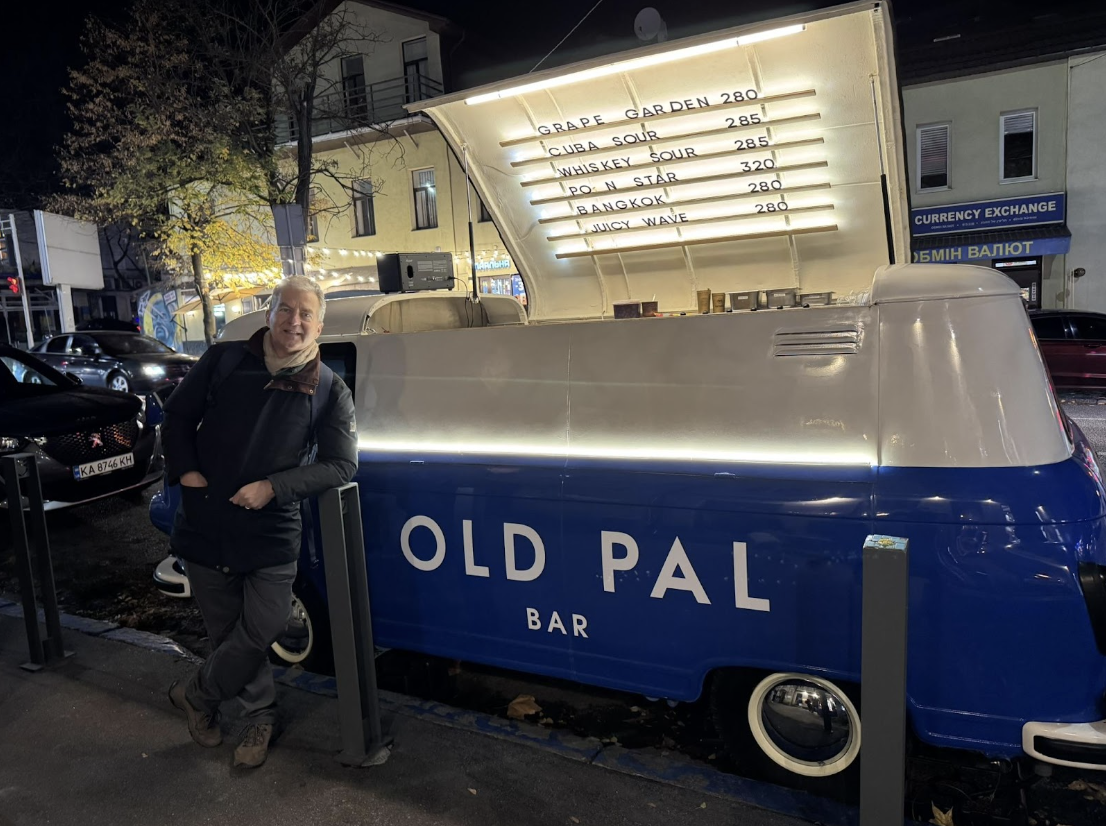
Dnipro, an industrial city straddling the Dnieper, surprised us with its lively central bar and music scene.
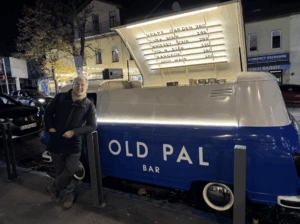
Outdoor bar in Dnipro: surprising bravery of citizens to carry on their lives
Over the next two days we visited STEP-IN mobile teams in Zaporizhzhia and Pavlohrad, 40 km and 100 km from the front. In Pavlohrad, petrol stations were crowded with soldiers; roads dominated by 4WDs; fresh trenches scarred the countryside.
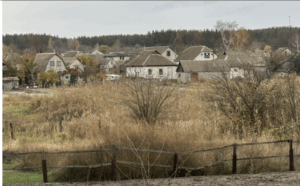
Ukrainian village on the road to Dnipro
Saturday 1st November
“The Cossacks believed that metal carries a memory,” Ivan said, bringing a sledgehammer down to cast a medallion from artillery shell casings. Dressed in black, he looked a modern echo of the eighteenth-century Cossacks. We stood in a cellar beneath a factory in Zaporizhzhia as the medallions were presented to us in thanks for MedAid’s work.
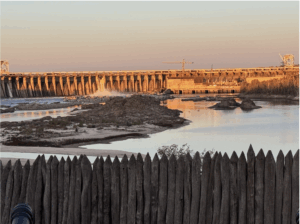
Stockade of the Cossack Sich in front of Zaporizhzhia dam
We met Irina, barely 30, who trains doctors and first responders in polytrauma care for STEP-IN. Founded eight years ago in Iraq and operating from Dnipro since 2022, STEP-IN now runs seven mobile teams across eastern Ukraine, staffed by Ukrainian and international clinicians supporting the most vulnerable.
Zaporizhzhia, historic heartland of the Cossack nation, hosts an extraordinary underground training centre run by Ivan and Irina. We walked through rooms stacked with munitions, supplies and training facilities. Irina described her escape from Russian-occupied territory near the Sea of Azov, once trapped among 5,000 cars. Many friends remain, forced to take Russian passports for access to healthcare.
We had already seen the consequences of polytrauma in Lviv: young men without legs mastering prosthetics; workshops moulding limbs; months of physiotherapy ahead.
In Irina, Pavlo, Kyril, Olha and Father Vitaliy we saw the grit that will carry Ukraine through. In Zuzana, Martina and their teams we saw the courage of foreign volunteers who choose to live and work here. And in Ivan’s medallion we saw a nation being forged in the fire of Putin’s futile attempt to reclaim it.
Everywhere we heard the same phrase: “This is a drone war.” Grenades, bombs, mines and missiles follow. As Gavin often said, more than 1.5 million veterans will one day return home. Beyond physical wounds, a mental-health crisis is coming. We must prepare now.
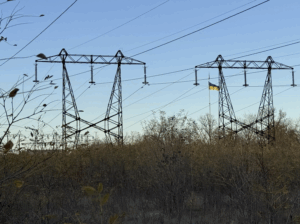
With Zuzana and Martina sharing the driving, Gavin and I had covered nearly 2,000 km in a single, unforgettable week. That night we took the train back home to Poland. That week the Russians stepped up their attack on the energy network, but mercifully left the railways alone; fortunate for us but no consolation for the millions of Ukrainians without access to heat or power, or both.
Share This Post